
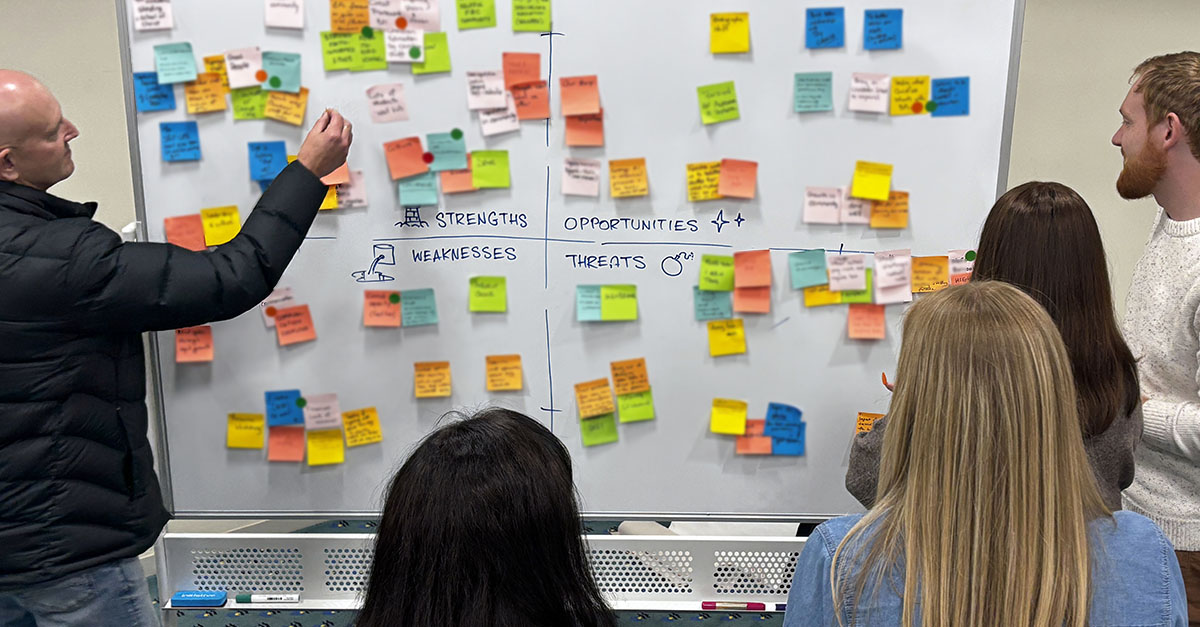
What is SWOT?
SWOT stands for strengths, weaknesses, opportunities and threats. The SWOT analysis is probably the most common go-to activity in developing any strategy, and for good reason: it’s a simple accessible way for anyone in a team or group to arrange their thoughts about — in consultant parlance — situational awareness. In other words: what’s going on right now?
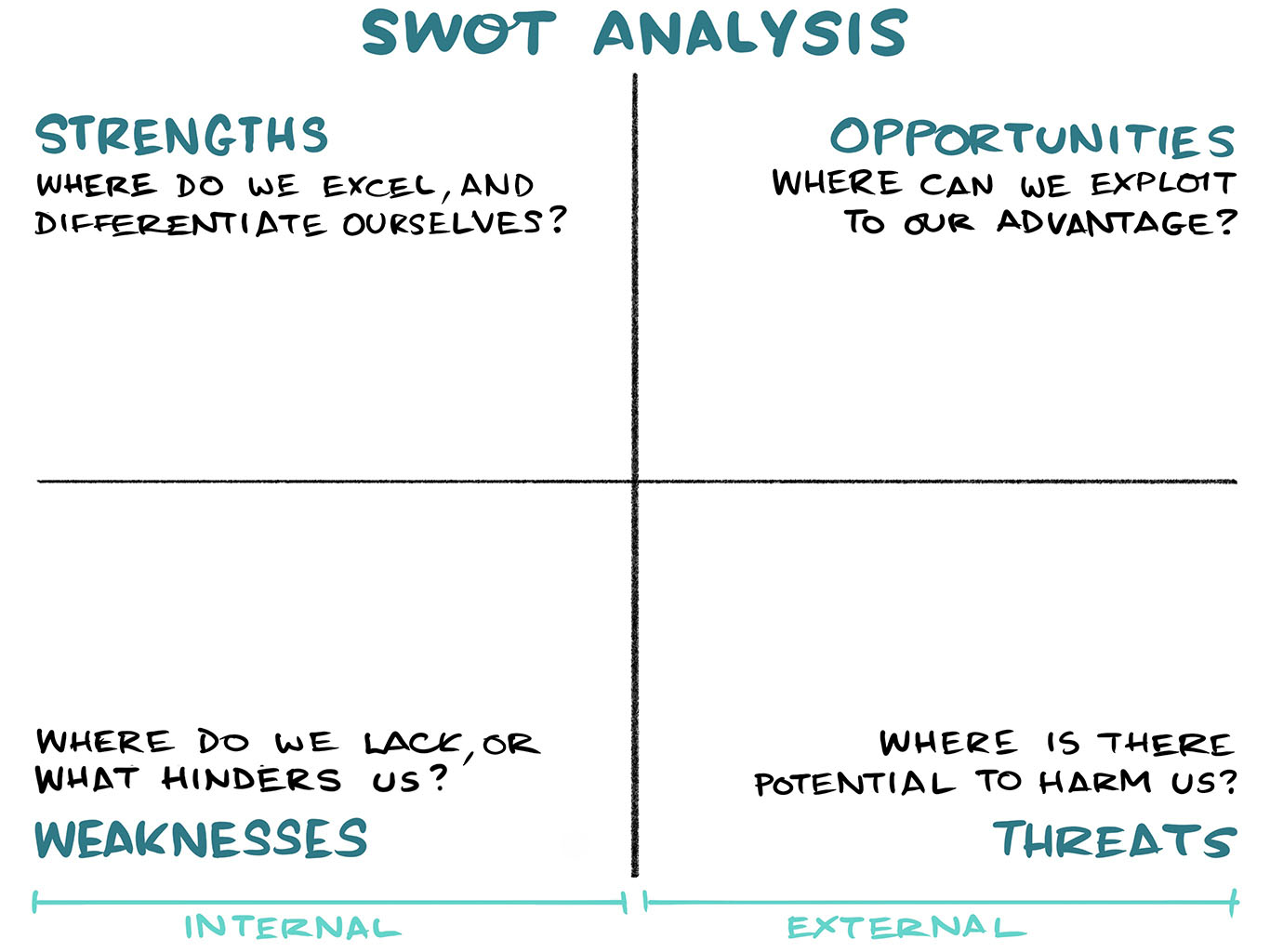
Your common garden variety SWOT chart or SWOT matrix
The SWOT analysis was conceived by American business consultant Albert S. Humphrey, while at the Stanford Research Institute (now known as SRI International) in the 1960s and 1970s, doing research for Fortune 500 companies. It’s great for evaluating an organisation’s internal and external environments, but countless organisations have also used it as an analysis lens for just about anything else, from an individual team, to a product, service or process, to a campaign or program of work.
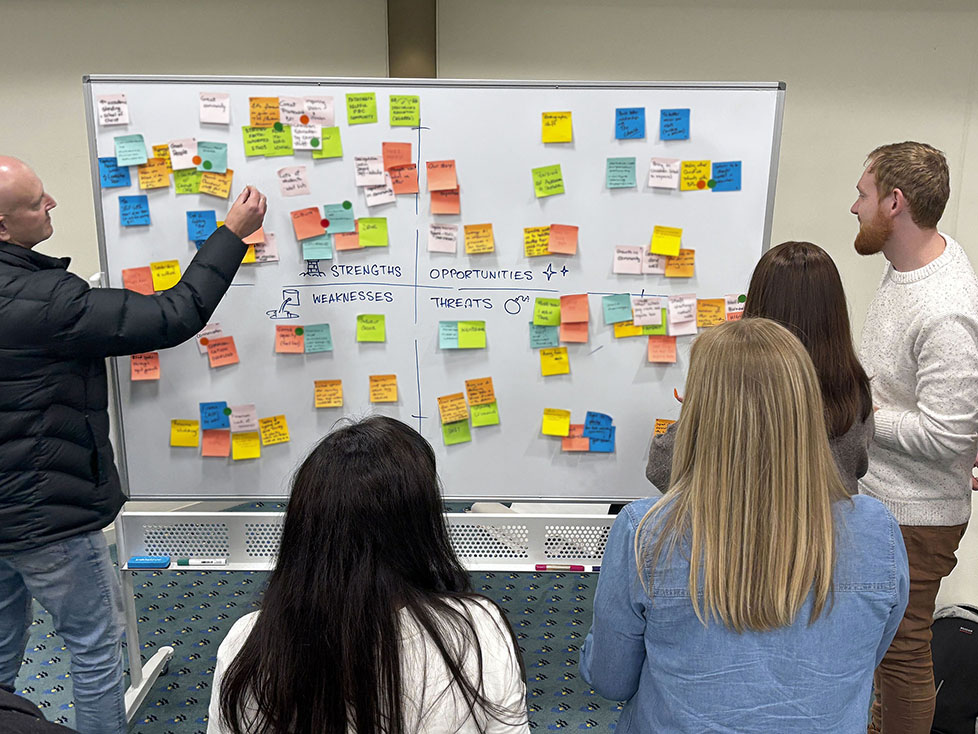
A group doing a SWOT analysis together using sticky notes and a whiteboard during a strategic planning session
Why do I like doing a SWOT analysis?
Now there’s a question for the dinner party, haha. But seriously, I pretty much always include a SWOT analysis in any strategy project I do, mainly because:
- It’s easy. There are a lot of fancy frameworks around (and as a strategy facilitation nerd, I’m totally here for all of them) but sometimes frameworks can get in the way. The SWOT as a framework is really easy for everyone to grasp and use.
- It encourages strategic thinking. I find so much about helping others to think strategically is to just give them a bit of structure to organise their thoughts.
- It works anywhere. Whether I’m facilitating online or in-person, with a multi-disciplinary team or a board, it’s just as effective.

A SWOT analysis is a great opportunity for a group to think strategically together
Why can SWOT analysis fail?
That said, I’ve seen SWOT analyses done badly, and I’ve had clients raise their eyebrows when I suggest doing one because of their previous (bad) experience with them. Here’s why I think this happens:
- Too damn ill-informed. There are other times where a group will collect their ideas for strengths, weaknesses, opportunities and threats, but only the ones that they can think of on the spot. If there is no homework done, the ideas that are captured tend to be the most well-worn, and/or the most popular. Bias abounds.
- Too damn generic. Sometimes a group never goes beyond the superficial level with their thoughts and ideas. They sometimes oversimplify complex issues (which unfortunately hides the actual juicy insights and nuances)
- Too damn philosophical. I’ve had times where groups ingratiate themselves with the ‘strengths’ part, but shy away from the tough parts (the threats and weaknesses), distracting themselves with false ideology, saying things like "There’s no such thing as weakness or threat." As @stpappi shows in this cartoon, it’s funny to say "I have a very severe drinking opportunity"
As a facilitator, I know when a SWOT analysis has fallen flat because the group gallops forth into the rest of the strategic planning process, without looking at the SWOT analysis again.
3 hacks to get more out of your SWOT analysis
All 3 of these things speak to the main intent of a SWOT: helping a group to think more strategically about their current situation, to define a strategic narrative about where to play and how to win, and to align on what to prioritise (and not prioritise) more effectively.
(1) Use SWOT at the right point in the process
For a SWOT to deliver real value, it must have context. It must be clear to the group what they really want out of it, otherwise it’ll just be a loose intellectual exercise.
Think of it like this: the SWOT activity should help to answer one more strategic questions, where the second part sets the context. For example:
- What are our strengths to capitalise on the most, to achieve our stated goals? Or:
- What are our main opportunities based on what we’ve learned about customer needs and what our competition are doing?
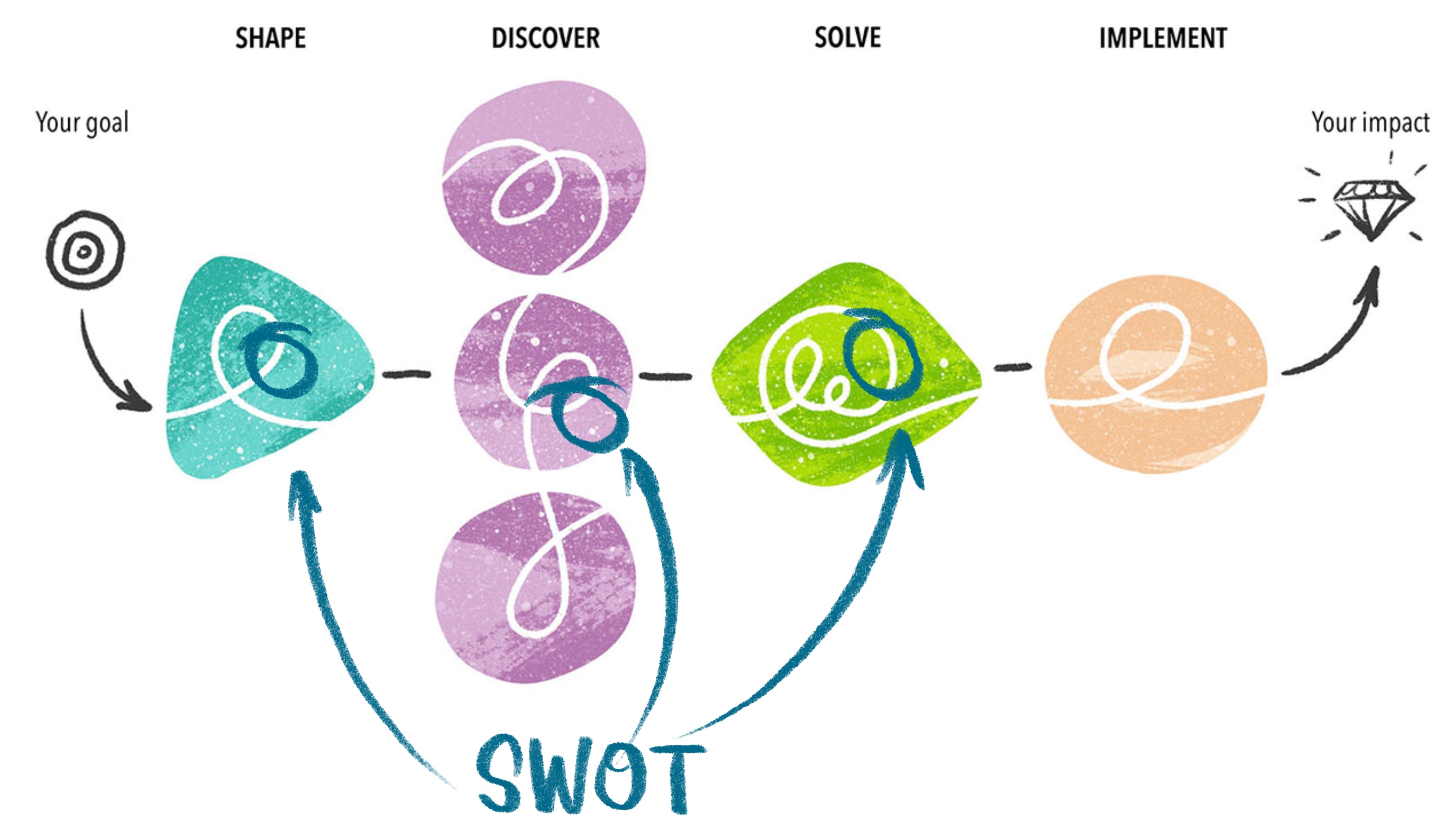
A SWOT analysis can happen (and be revised) throughout the Bright Pilots process (for developing strategy, products, services or campaigns), including the Shape phase, the Discover phase and the Solve phase
That’s why it’s often better to do other moves together before a SWOT, like customer needs interviews, a retrospective analysis, or a PESTLE analysis (again in consultant-speak: an internal scan and an external scan). Plus, there’s no harm in revisiting the results of your SWOT analysis once you have established your vision and major goals, to see if there is a clear logic between them and your SWOT.
This will help your SWOT analysis to be much more specific and actionable.
(2) Ruthlessly prioritise your SWOT items (visually)
If a group doesn’t reduce their lists of strengths, weaknesses, opportunities and threats into two or three items per list, then they’re not really thinking strategically, nor will they get much value from the SWOT.
Here is the easiest way I know how to achieve this. After everyone has listed out all their ideas and thoughts in each quadrant of the 2x2 SWOT chart, draw a circle in the middle of the chart, then ask your group to move their top 3 from each quadrant into the priority circle.
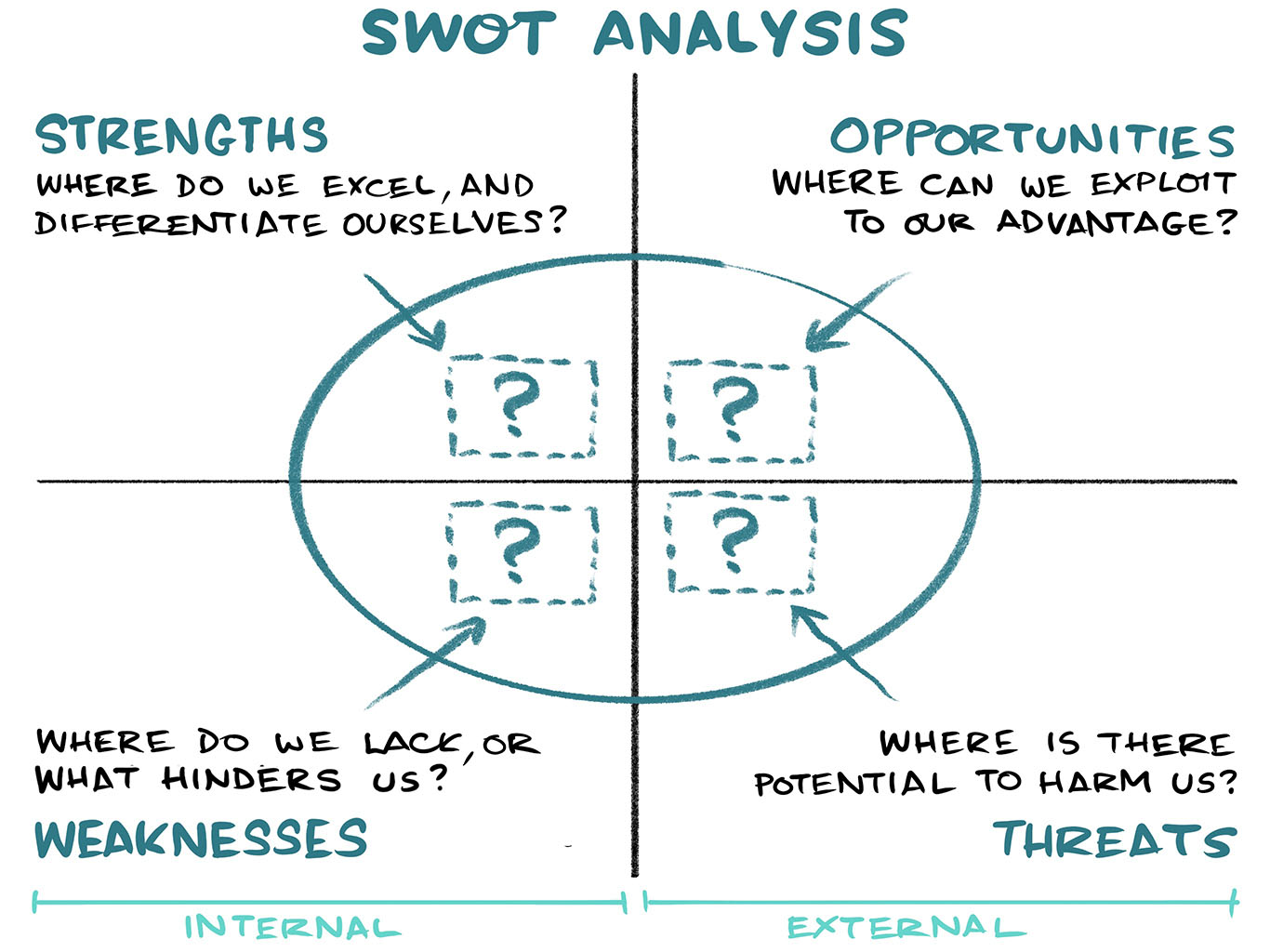
The Bright Pilots version of the SWOT 2x2 chart, with a circle in the middle to place prioritised items
Now, you should really get some strategic thinking going! Now they will have to go deeper in the more superficial items, and weigh up together what are the most significant ones and why.
Your group might get frustrated because they can’t decide together, because of different internal priorities, and/or they don’t know enough information to decide. That’s good! That’s the SWOT really earning its money. It’s perfectly fine if the group realises that they need to pause and do some more internal research, or to at least carry a risk in making a call together.
(3) Add a visual metaphor
Here’s another visual hack (surprise surprise). It’s no secret that people think and speak in metaphors, including the group you’re working with. I’m sure these sound pretty familiar:
- “Move the needle” i.e. make a measurable impact
- “Shift the goalposts” i.e. change expectations or requirements
- “Raise the bar” i.e. increase standards or expectations
Yes, these are cringy office clichés, but most clichés have a metaphor embedded in them can sometimes be really useful. Often the reason why these turns of phrase become cliché is because the metaphor really resonates with people (or at least really resonated at some point before it became overused).
That’s what we’re after here. A 2x2 SWOT chart is a great way to help organise everyone’s thoughts, but overlaying a visual metaphor on this will add more meaning and really elevate their thinking, by helping them to reframe the contents in more resonant ways, and to relate to the content more personally.
For example:
- SWOT as a boat - or a ‘SWOT Yacht’ as some facilitators like to call it! Strengths become the winds that fill the sails; opportunities become the stars that guide a team; weaknesses become anchors that hold the boat back; and threats become deadly mines in the water.
- SWOT as a bus - Strengths become the parts of the engine of the bus; opportunities become attractions on a map to stop at; weaknesses become excess onboard luggage that the team no longer needs; and threats become potholes in the road ahead.
- SWOT as a vine - Strengths become the roots of the vine; opportunities become the trellises; weaknesses become pests (like aphids and moths); and threats become diseases like Phylloxera and mildew.
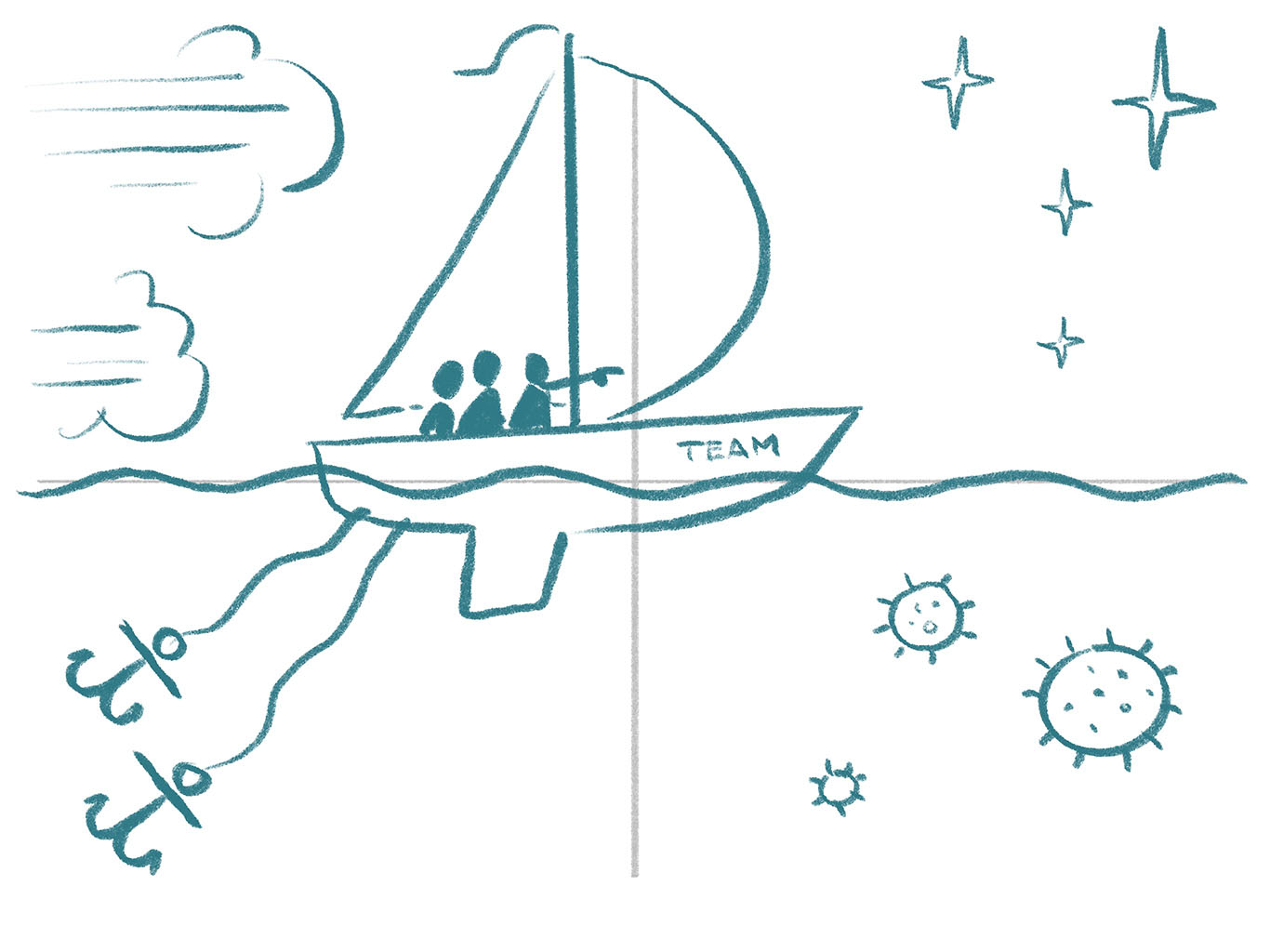
The 2x2 SWOT chart with a yacht overlaid as a visual metaphor, reframing the elements as Tailwinds, Stars, Anchors and Mines. This can feel more meaningful to your team, especially if they imagine themselves in the boat together.
The trick is picking a metaphor that will resonate most with your group. You could pick one yourself, or better yet, get the group to choose one themselves.
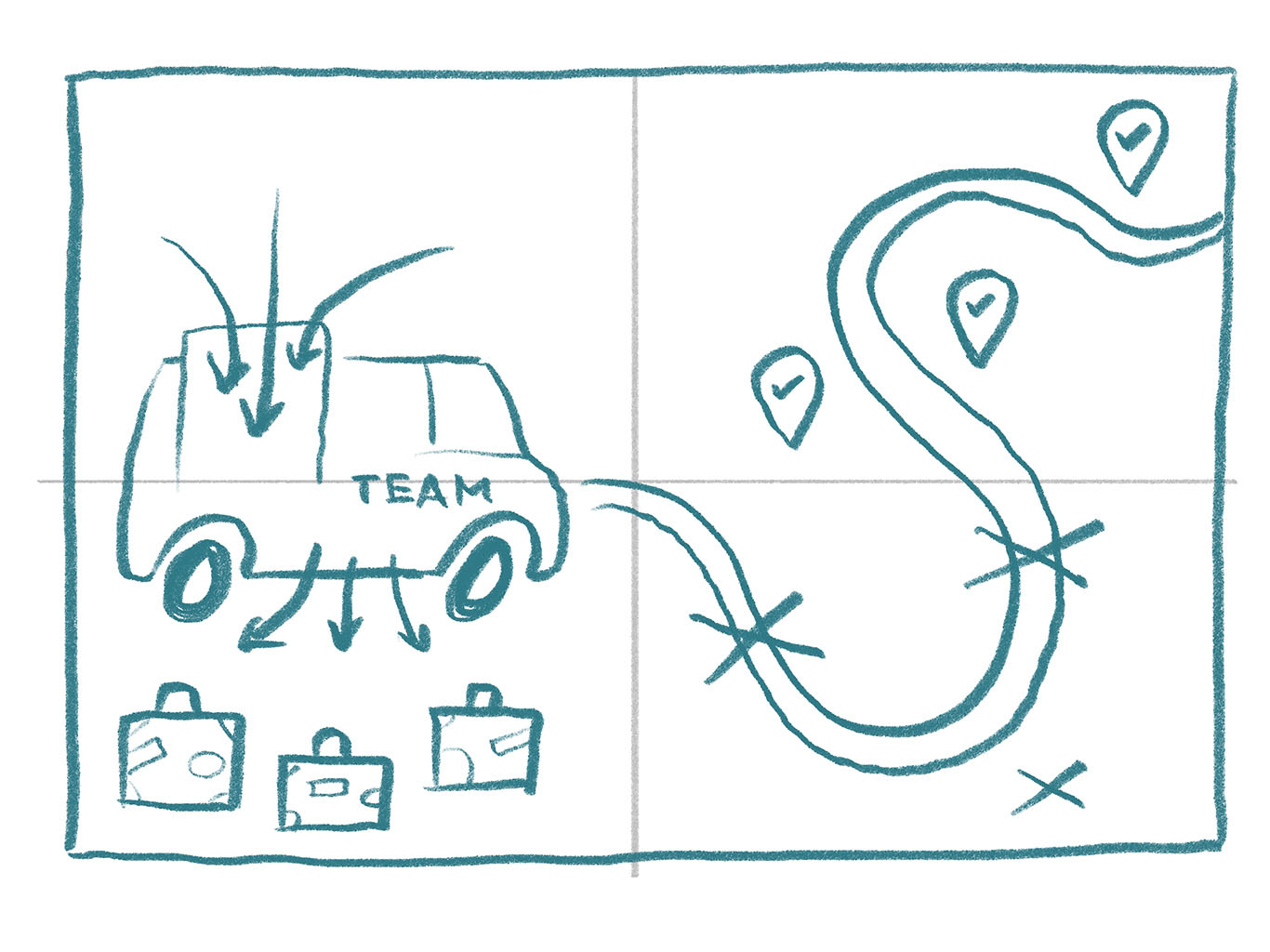
The 2x2 SWOT chart with a bus and map overlaid as a visual metaphor, reframing the elements as Engine, Attractions, Baggage and Potholes. This one works great if the analysis is more about a team working together over time, rather than a strategy or product.
In the Boat and Bus examples above, these might feel more meaningful to your group if they imagine themselves in the boat or bus, going on a journey together.
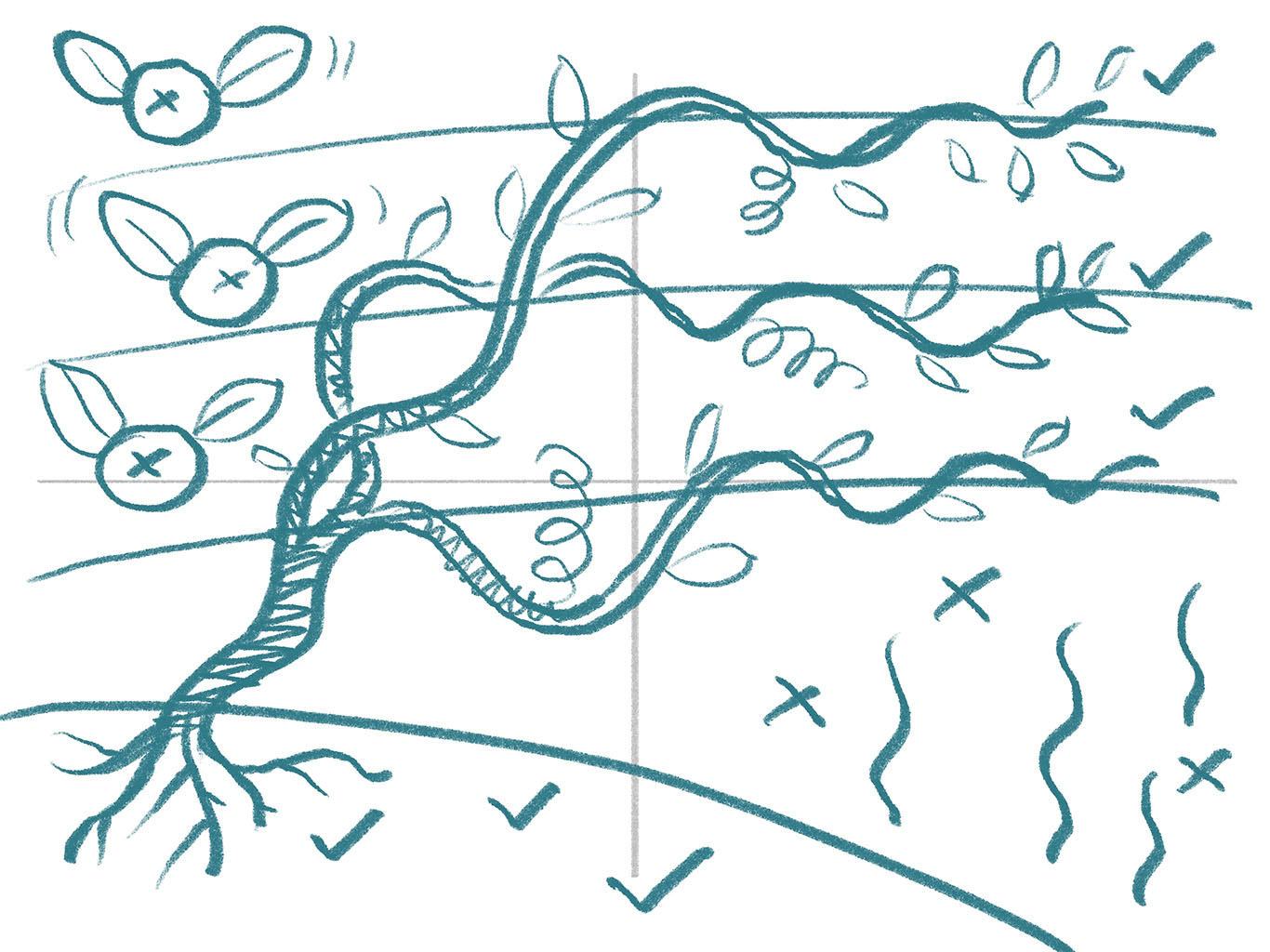
The 2x2 SWOT chart with a vine overlaid as a visual metaphor, reframing the elements as Roots, Trellises, Pests and Diseases. This one is more organic than the other two.
The vine visual metaphor might work well if the object of analysis needs a more organic ‘growth’ flavour. Note that this version strays away from the 2x2 grid, but in essence still has the same 4 elements for a group to consider and analyse.
Optimise for what counts
There you have it, 3 ways to hack your SWOT for more strategic value. Different hacks will work in different ways depending on your strategy project and what works or doesn’t work for your group, but I beg you: please optimise for a quality outcome — a small prioritised amount of items, based on a decent internal and external scan, to use in a decent strategic narrative — not for time or comfort.
If this chimes with you and you’d like more ideas for group facilitation, check out the resources section, or contact me for a chat about how we could work together.